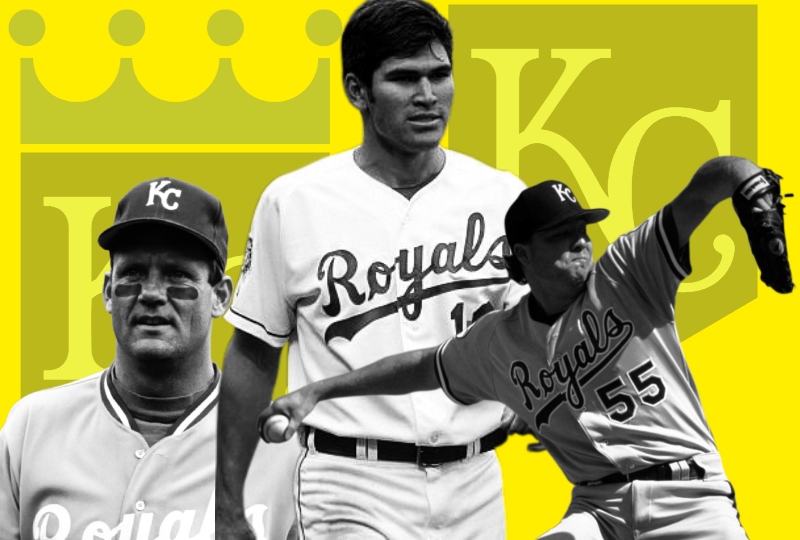
If your parents shop at a grocery store when you’re a child, you’re likely to shop at the same grocery store when you grow up. But a number of things can occur that might cause you to rethink your decision: the customer service might tank, the store might change hands a few times, they might raise prices. Also, another store might open in your town, providing options. As a result, you might end up going elsewhere to buy your lemon bars. But baseball doesn’t work that way.
If you’re a Royals fan when you’re nine, you’ll be a Royals fan when you’re 13, and when you’re 27, and so on. The team can win, lose, be sold, raise prices, tear down or rebuild their stadium, fire their manager: you’ll still wear that white “KC” on your royal blue cap.
But why? Why do customers remain loyal to baseball teams in ways they don’t other brands? The answer isn’t simple, it’s the result of several factors.
Geography is important: if a person stays in the same region they will almost certainly still pull for the same team. Then there’s the influence of family and social upbringing, if everyone in your life roots for the Royals, you will. It’s tribal. Few people, very few, will abandon their chosen team based on misfortune.
Kauffman Family and the Golden Years for the Royals
For more than a decade, the Kansas City Royals were a model franchise, starting in the mid-1970s. An expansion team that entered the major leagues in 1969, the Royals quickly hired skilled front office people to make wise baseball decisions. The patriarch of the Royals from their nascent beginnings was Ewing Kauffman, a German-American who was born on a farm in Missouri during World War I. He later became a successful insurance salesman, but his great fortune was made when he started a pharmaceuticals company with a $5,000 investment. Kauffman wasn’t good at business: he was a genius. He eventually built Marion Laboratories into one of the world’s most valuable companies. He made oodles and oodles of money. He didn’t do anything unless he did it well, and unless he could make money doing it. He approached the Royals with the same acumen, and quickly the team was a winner.
The halcyon days of the Royals were 1975 to 1989, when the club posted seven 90-win seasons, won seven division titles, two pennants, and their first world championship. For several seasons they were the little David fighting the mighty Goliath of the Yankees. Four times from 1976 to 1980, the scrappy rascals from Missouri squared off with the big bad boys from the Bronx. Three times they were vanquished, before finally slaying the Bombers. Those teams featured many of the best players in franchise history: George Brett, Frank White, Hal McRae, Willie Wilson, Dennis Leonard, Paul Splittorff, Bret Saberhagen, and the droll relief ace Dan Quisenberry. In 1985 they finally hoisted the World Series trophy, which manager Dick Howser dedicated to Mr. Kauffman, surrounded by his faithful players. It was great to be young and a Kansas City Royal.
The Glass Era
As they say, what goes up must come down, and the Royals took a tumble as the 80s turned into the 90s. The farm system dried up, pitching prospects got hurt, Brett retired. The team had a winning record in the strike-torn 1994 season under McRae, back in uniform as manager. By that time, Kauffman was gone, having passed away in September of 1993. He was replaced by Dave Glass, a flesh-and-blood human being with a super-villain name. He even made his fortune working for a villainous company: Wal-Mart. Glass was a Missouri native, a baseball fan dating back to the years that Kansas City hosted the Athletics. Mr. Glass was nearly 60 years old when he ascended to the role of chairman of the board of the Royals, and he quickly displayed his ruthlessness. This man had no ruth.
One of Glass’s first decisions was to try to bust the players’ union during the labor strife of 1994-95. Glass led a group that came up with the idea for replacement players, a tactic designed to shut out major league players and destroy their solidarity. Weaned at the nipple of Sam Walton, founder of Wal-Mart, Glass was ardently anti-union and anti-employee. He favored a salary cap, and reportedly had a heated conversation with owners Ted Turner and George Steinbrenner in which he attempted to “educate” them on how to treat their labor.
The Royals fired McRae and installed Bob Boone as manager in 1995, but he didn’t have to deal with replacement players. That issue was resolved when federal judge Sonia Sotomayor ruled such a tactic was illegal. The players returned to play the 1995 season and the Royals finished 30 games out of first place. The following year they finished in last place for the first time in franchise history. In 2002, on their ninth manager since they won the pennant 17 years earlier, the Royals lost 100 games for the first time. They lost 104 two years later, and 106 in 2005, followed by a six-game improvement to 100 losses.
Glass didn’t know what the hell he was doing. After Kauffman’s death, he slashed payroll from $42 million to $17 million, and he held the team payroll down for two decades. The front office was in disarray: they jettisoned good players and made bad draft picks. When they did produce a solid major leaguer, Glass dumped him before they had to pay him. Glass treated his team like a retail store: slash expenses, keep prices as high as possible, and leverage your labor until it breaks. Of course, when you do that to a baseball team, it loses a lot of games. In Kansas City, fans were unused to such things, but they dutifully kept going to the ballpark. They were midwesterners, this was where they always got their groceries.
Kevin Appier: Wasted Career in KC
Kevin Appier was drafted by the Royals as the ninth overall selection in 1987, when Mr. Kauffman was still breathing and the organization was doing things the right way. He tossed his first pitch for KC two years later, and he won 12 games as a rookie. Two years later in 1992, he won 15 games, and the following season in 1993, the year Ewing Kauffman died, Appier led the American League in ERA and won 18 games. He was a big, tenacious, hard-throwing righty. But he was destined to pitch for terrible teams for much of his career.
Appier pitched 13 seasons for the Royals, most of them when Mr. Glass was shattering the team to smithereens, refusing to field a real major league club. Glass was the loudest voice screaming for revenue sharing, pointing his evil finger at the big market teams and claiming his small market club needed corporate welfare to stay afloat. Nevermind that his Wal-Mart stock and personal fortune made him one of the wealthiest owners in professional sports.
In his 13 seasons in a KC uniform, Appier won 55.6% of his decisions, while the team won 46.1% of their games when Appier didn’t pitch. His ERA+ for Kansas City, pitching mostly for a poor defensive team, was 137. That means he prevented runs at a rate 37% better than an average pitcher in his league. As you’ll see below, that’s an impressive figure.
Appier left the Royals at the trade deadline in 1999, hopping an escape pod to Oakland. He won 15 games the following season for the A’s, and two years later he was Rotation Emeritus for the Angels. At age 34 he logged 188 innings and won 13 games. He started Game Five of the AL Championship Series, and even though he didn’t earn the win, he pitched well and the Angels clinched their first pennant. He started two games in the World Series, though he was uneven in both. Still, he earned a ring, which was something Mr. Glass in Kansas City was never going to allow him to do. During Appier’s tenure with the Royals, Glass made “important” decisions like taking away cell phones from scouts because they were too expensive, and removing batting cages from beneath the stadium to lower the electricity bill. Bravo!
The Royals remained a cheap, anti-labor organization for two decades. They still are as of this writing. In 2006, Glass created controversy again when he revoked the press credentials of two reporters who questioned team management on business decisions. That just goes to show that Glass doesn’t limit his bullying to employees, he extends it to the media as well. In 2014 the Royals snuck into the playoffs as a wild card and won the pennant. They won the World Series the following year. Despite that recent success, the Royals under Glass have been a tire fire. They have, as of 2022, had only four winning seasons in the nearly 30 years that Glass has owned the team. They lost 100 games for a sixth time under his watch in 2019. Yet the fans stay loyal, some of them even swallowing the “small market vs. big market” lie. Most of them are still supporting their team, even when it wrongs them year after year.